

When renovating a bathroom, repairing a leaking shower, or tiling a new kitchen splashback, the tiles get all the attention. But the material connecting them, the grout, is what determines whether that space will last five years or fifty.
Choosing between epoxy grout and cement grout is not just an aesthetic decision. It is a structural one. The fundamental differences in how these two materials handle water absorption, chemical exposure, and building movement dictate how often you will be scrubbing mould, whether your waterproofing membrane will fail prematurely, and how much money you will spend on maintenance over the lifetime of your home.
While traditional cement grout has been the standard choice in Australia for decades, high-performance epoxy grout has completely changed the baseline for wet-area durability. Yet, the choice is not as simple as defaulting to the most expensive option. Your decision depends heavily on the specific room, your budget, the installation context, and crucially, if you live in Queensland or coastal Australia, the humidity and temperature extremes of your local climate.
In this comprehensive guide, we strip away the generic advice to examine the exact chemical and functional differences between cement and epoxy grout. You will learn why grout cracks, how porosity causes hidden water damage, and exactly which grout you should specify for every room in your house to protect your property investment.
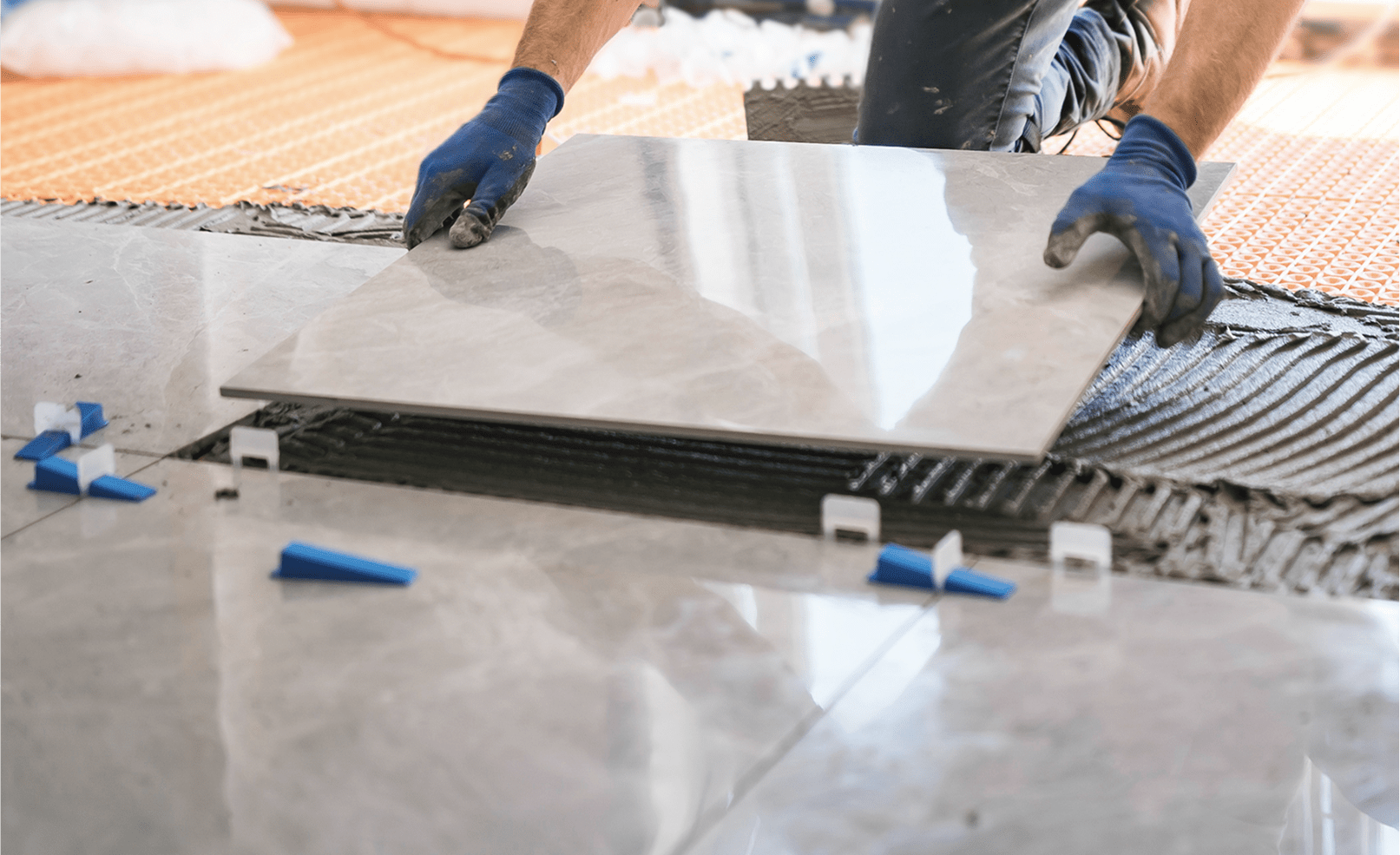
Cement grout is the traditional option. It has been the industry standard for decades and is found in almost every bathroom, kitchen, and laundry room installed before the mid-2000s. It is a powder-based mixture of Portland cement, sand, and water that cures to form a solid, rigid joint between tiles.
There are two main types you will encounter:
Cement grout is porous. Full stop. Even a perfectly installed, recently sealed cement grout joint will absorb water over time. That porosity is not a flaw in low-quality products. It is an unavoidable property of the material itself.
For dry areas, a living room floor, a hallway, and an external paver, porosity is a manageable issue. Seal it and maintain it, and it performs fine.
For wet areas, that porosity is a slow-motion problem. Water goes in. It does not always come back out. It sits against the tile substrate, saturates the bed, and eventually reaches the waterproofing membrane behind the wall or under the floor. If any part of that system is compromised, you leak it.
Epoxy grout is a two-part or three-part system made from epoxy resins and a hardener, mixed with a filler aggregate. Unlike cement-based products, epoxy grout does not rely on cement chemistry to cure. It undergoes a chemical reaction between the resin and hardener that creates an extremely dense, cross-linked polymer matrix.
That matrix is what makes epoxy grout fundamentally different. It is not just water-resistant. It is non-porous. Water cannot pass through it at all.
Some modern products include a modified epoxy grout, a hybrid that blends epoxy resins with Portland cement. These products sit between the two worlds: they are easier to work with than full epoxy and more durable than standard cement grout. It’s worth asking about if you are working in a moderate-moisture environment, and cost is a concern.
Every property people compare between these two grouts’ durability, mould resistance, stain resistance, waterproofing, and maintenance requirements flows directly from one fundamental difference. Cement grout is porous. Epoxy grout is not. Everything else follows from that.
|
Property |
Cement Grout |
Epoxy Grout |
|
Composition |
Portland cement + sand |
Epoxy resin + hardener + filler |
|
Porosity |
High |
None |
|
Waterproof |
No (requires sealing) |
Yes (inherently) |
|
Mould resistance |
Low |
High |
|
Stain resistance |
Low without sealer |
High |
|
Chemical resistance |
Low |
High |
|
Colour stability |
Fades over time |
Colour-fast |
|
Joint width suitability |
Sanded: 3mm+, Unsanded: under 3mm |
Usually 1.5mm to 12mm |
|
Flexibility |
Rigid |
Slight flex (absorbs vibration) |
|
Application difficulty |
DIY-friendly |
Requires experience |
|
Upfront cost |
Low |
3 to 5 times higher |
|
Sealing required |
Yes (ongoing) |
No |
|
Lifespan in wet areas |
5 to 15 years |
20 to 30 years |
|
Standards |
AS 3958.1 |
ANSI A118.3 / ISO 13007-3 |
The grout cracks for three main reasons:
Choosing between epoxy and cement grout in Sydney or Melbourne is a different calculation from making that choice in Southeast Queensland.
Brisbane, the Gold Coast, and the Sunshine Coast experience
What this means in practice: A cement-grouted shower in Brisbane that might last 12–15 years in a dry climate may start showing mould penetration, joint deterioration, and colour fade within 5 to 8 years. Sealers wash out faster under heavy shower use. Resealing gets skipped. The grout starts behaving like an unsealed sponge.
This is one of the reasons Aquatech Grouting sees so many regrouting jobs in Brisbane, the Gold Coast, and the Sunshine Coast that are in relatively modern bathrooms, not old ones. The climate accelerates the timeline.
If you want to read more about how water gets behind tiles and what it does to your bathroom structure, this guide on how to tell if your waterproofing has failed is worth reading before you make a grouting decision.
Cement grout gets its colour from pigments added to the powder. Those pigments are water-soluble enough to be vulnerable to two things: cleaning products and water itself.
Over time, dark-colored cement grout fades. White and light grey grout turns beige, then brown, as dirt embeds into the porous surface and pigment washes out during cleaning. This is not a cleaning problem. It is a chemistry problem.
Epoxy grout is colour-fast. The pigment is locked into the filler aggregate, not sitting in a water-soluble matrix. What you mix and install is the colour you keep. No fading. No discolouration from cleaning. This matters especially for property managers and investors whose properties need to look the same in year ten as they did in year one.
There is a visual caveat. Epoxy grout can have a slightly glossier, more uniform finish than textured cement grout. Some homeowners prefer the natural, matte look of cement and find epoxy looks a little more plastic-like in certain lighting. This is genuinely a preference and worth seeing on a sample board before committing.
Efflorescence is the white powdery residue that appears on cement-based grout joints over time, especially in areas with high moisture movement. It forms when water moves through the porous cement matrix, dissolves soluble salts, and carries them to the surface. The water evaporates. The salts remain. You get white streaks or patches on the grout joints.
It is ugly. It is difficult to remove completely. And because the mechanism that causes it, water moving through porous grout, keeps happening, it keeps coming back.
Epoxy grout has no soluble salts and no porosity for water to carry them through. Efflorescence simply cannot form.
Epoxy grout is harder to apply than cement grout. That is not an opinion. It is a widely agreed-upon fact in the tiling industry.
The main application challenge is grout haze. When epoxy grout is applied, and the excess is not cleaned from tile faces before it begins to cure, a thin, almost transparent film bonds to the tile surface. This film is very difficult to remove once cured; in some cases, it requires professional-grade residue remover, and in bad cases, it can dull or damage the tile surface permanently.
Best practice for epoxy application:
For most homeowners, these complexities mean epoxy grouting is better left to experienced tilers or specialist grout technicians. The installation skill required is why epoxy jobs cost more in labour, not just materials. A poorly installed epoxy job is worse than a well-installed cement job.
If you are at the DIY end of the spectrum and determined to use epoxy, trial a small concealed area first. The working time is short. There is no room for hesitation once you start.
Epoxy grout costs 3 to 5 times more than cement grout per bag. Labour costs for professional epoxy application also sit higher than cement grout application. That upfront number is real.
Here is the lifetime calculation that changes the picture:
Cement grout pathway for a Brisbane shower (estimated):
Item | Cost range | Frequency |
Sealing after installation | $80–$200 | Every 1-2 years |
Grout cleaning (professional) | $150–$300 | Every 2-3 years |
Partial regrouting (tiles stay) | $400–$800 | Year 8-12 |
Full regrout or shower rebuild | $1,500–$4,000+ | Year 1-20 |
Epoxy grout pathway for the same shower:
Item | Cost range | Frequency |
Higher upfront install cost | +$200–$600 | Onceasd |
Minimal ongoing maintenance | Negligible | As needed |
Regrout or rebuild | Rarely needed in a 20-year period | – |
For rental properties, strata buildings, and managed facilities where maintenance is an operational cost rather than a personal inconvenience, the epoxy advantage compounds quickly over a portfolio of bathrooms.
Flexible epoxy grout is a variation worth knowing about, particularly for balconies and high-traffic floors.
Standard epoxy grout is tough but rigid. Flexible epoxy adds a component that gives the set joint a degree of flexibility. Where balconies, outdoor entertainment areas, and commercial floors see heavy foot traffic, they also see constant vibration and load cycling. Flexible epoxy handles that stress better than rigid epoxy, which in turn handles it better than cement.
SCR Melbourne and other industry specialists specifically recommend flexible epoxy for balconies over any other option. In Queensland, where balconies and outdoor tiled areas are a standard feature of the housing stock, this is worth factoring into your material selection before work starts.
The waterproofing membrane in your shower is behind the tiles and beneath the floor. Its job is to stop water from reaching the timber framing, concrete substrate, or building structure. Grout’s job is to seal the joints between tiles. But if the grout fails, water bypasses the tile surface and puts load on the membrane.
A healthy membrane can handle occasional moisture. But cement grout that is failing, cracked joints, old sealer, mould-softened voids, and water constantly leaking through. The membrane takes on water with every shower. Eventually, a membrane installed to handle incidental water contact is experiencing near-continuous saturation. Failure follows.
Epoxy grout acts as a second line of waterproofing defense. Not a replacement for the membrane, the membrane still needs to be correctly installed, but a partner to it. When the grout does not let water through, the membrane does not have to carry the full waterproofing burden.
This is why the correct grouting choice matters so much for long-term shower health. It is not just about the joints looking good. It is about protecting the structure you cannot see.
For a deeper understanding of how shower waterproofing systems work and when regrouting solves the problem versus when a full shower repair is needed, that distinction is explained in more detail on the services page.
Use epoxy grout.
This is the highest-moisture zone in any Australian home. Cement grout will eventually fail here. It is not a question of if. It is a question of how long until the water gets behind the tiles and causes a bigger problem. If your shower is being regrouted and cost is the concern, understand that a proper shower regrouting with epoxy grout once is almost always cheaper than regrouting with cement grout and then again in seven years.
Use epoxy grout
Cooking generates a combination of steam, grease, food acids, alkaline cleaning products, and high temperatures. All of these attack cement grout. Grease embeds in porous joints and does not clean out. Food acids weaken the cement matrix over time. Epoxy handles all of it. The chemical resistance is one of the main reasons commercial kitchens use nothing else.
Epoxy preferred; cement acceptable with regular sealing.
Bathroom floors see water splashes, wet feet, and regular mopping but not direct shower spray. If the floor is part of a fully wet room design, use epoxy. If it is a dry bathroom floor that gets incidental moisture, well-maintained and regularly resealed cement grout is workable. In Queensland’s humid conditions, epoxy is still the better call.
Either, depending on use intensity
A domestic kitchen floor is a lower risk than a splashback because it is not in the splash zone. Cement grout with a penetrating sealer is fine for a standard home kitchen. For a household with kids, heavy cooking, a dog, or a commercial-grade kitchen setup, step up to epoxy.
Epoxy preferred.
Regular water exposure and detergent contact are often overlooked in maintenance routines. Laundries tend to get neglected until something goes wrong. “Epoxy” means nothing goes wrong.
Cement grout with quality sealer is fine.
Dry area. The porosity issue only matters where moisture is involved. Save the epoxy premium for the wet zones.
Epoxy only.
Constant water submersion and chlorine contact will destroy cement grout joints within a few years. Pool-grade epoxy grout is formulated specifically for this environment and is the only appropriate choice.
Flexible epoxy
Exposure to sun, rain, foot traffic, and temperature cycling makes this the most demanding tiling environment outside a pool. Flexible epoxy grout handles all of it. Cement grout on an exposed Queensland balcony is a guaranteed problem.
Before making your final decision, consider the application pathway.
Cement grout is genuinely DIY-friendly. It is widely available (Bunnings, Mitre 10, any tile supply warehouse), has a generous working time, is tolerant of minor application inconsistencies, and is easy to clean during installation. For a homeowner tackling a laundry backsplash or a bedroom floor, cement grout with a penetrating sealer is a completely reasonable choice.
Epoxy grout is not DIY-friendly for first-timers. The short working time, the sensitivity to overworking the mix, the need to clean tile faces immediately, and the consequences of leaving haze to cure all require experience. Most tilers become comfortable with epoxy after several jobs. For a homeowner attempting epoxy for the first time, the risk of a substandard result is real.
This matters for the total cost calculation. Epoxy done badly is not cheap. A shower regrouted with epoxy by someone who has never worked with the product can come out looking worse than the cement grout they were replacing.
For wet area regrouting, Aquatech Grouting uses Mapei epoxy grout, specifically selected for its performance in Queensland’s humidity levels and its resistance to the cleaning chemicals used in residential and commercial settings. If you want to understand what a professional epoxy regrouting job involves and what to expect from the process, a free quote and site assessment cover exactly that.
Choosing between epoxy grout and cement grout ultimately comes down to where the tiles are installed and how much moisture they’ll face over time. Cement grout is affordable, easy to apply, and works well in dry areas like living rooms or hallways. But because it’s naturally porous, it absorbs water, dirt, and cleaning chemicals, which can eventually lead to staining, mold, and deterioration, especially in bathrooms and other wet spaces.
Epoxy grout, on the other hand, is non-porous and far more resistant to water, stains, and chemicals, making it the better long-term choice for showers, kitchens, laundries, balconies, and other high-moisture areas. While it costs more upfront and requires a more skilled installation, it dramatically reduces maintenance and lasts much longer. For homeowners who want durability and fewer problems down the track, epoxy grout is often the smarter investment.
No. Any regrouting job, whether the goal is to switch from cement to epoxy or simply to refresh deteriorated cement grout with fresh cement, requires the old grout to be ground out first. Applying new grout over old grout gives you a thin layer with no real bond strength. It will fail quickly. The grinding step is not optional.
It depends on the stone and which epoxy grout product is used. For glass tiles, you need a fine-particle epoxy grout to avoid scratching the surface. For marble and some limestone tiles, the issue is grout haze; epoxy haze on a polished stone surface is very difficult to remove. Always test on a spare piece before grouting the whole area.
No. Epoxy grout is colour-fast. The pigment is locked into the polymer filler. Unlike cement grout, whose surface pigment can wash out and fade, epoxy retains its colour for the life of the joint. This is one of the main reasons it is specified in commercial and hospitality environments where appearance consistency matters.
In wet areas with correct installation, 20 to 30 years is a reasonable expectation. Some epoxy grout jobs last longer. The joint is typically more durable than the tiles themselves. Cement grout in the same wet area conditions: expect 5 to 15 years before significant deterioration.
That is almost certainly efflorescence. Soluble salts are carried to the surface by moisture movement through the porous cement. It is a sign that water is moving through your grout joints, which means your grout is doing its job as a sponge rather than as a barrier. Efflorescence can be cleaned with an acid-based cleaner, but it will return unless the moisture movement issue is addressed. Epoxy grout does not produce efflorescence.
You can. Many showers have cement grout and function for years. But “properly sealed and maintained” requires discipline. Annual resealing, avoiding aggressive cleaning products that strip the sealer, and keeping an eye on joint integrity. If the shower has not been resealed recently, it is probably already letting water through at the joint level. If you want to stop worrying about that, the switch to epoxy grout is the more permanent solution.
Almost always yes in wet areas. Tenants do not maintain grout sealing. Rental properties have higher use intensity than owner-occupied homes. The maintenance cost savings and the reduction in tenant complaints, including leaking shower calls, more than offset the upfront premium over a standard investment property holding period.