

Grout replacement is not just about making tiles look clean again. It is about protecting the structure underneath.
When the grout between your tiles breaks down, whether from age, moisture, mould, or heavy use, water finds a way in. Once water gets beneath the tiles, it damages waterproof membranes, swells timber substrates, and causes structural problems that cost far more to fix than the original grout job.
If you are in Brisbane, the Gold Coast, or the Sunshine Coast and your grout is crumbling, blackened with mould, or missing in sections, this guide covers everything you need to make the right decision, from understanding what grout replacement involves to what it costs to whether you need a professional or can do it yourself.
Grout replacement is the process of removing old, degraded grout from tile joints and replacing it with fresh grout. It is also referred to as regrouting, tile grout replacement, or grout removal and replacement depending on the context.
It is different from grout repair. Grout repair patches isolated cracks or small sections of damage without removing the full joint. Grout replacement removes everything in the joint, down to at least 2–3mm, and fills the entire joint with fresh. The result is a structurally sound, watertight, and visually uniform surface.
Not every grout problem requires full replacement. Here is how to read the signs:
Choosing between grout repair and grout replacement depends on the condition of your tile joints. While repair patches minor, isolated cracks, full replacement removes degraded, mould-damaged grout to restore the waterproof seal and protect the underlying substrate from water ingress.
Condition | Right Action |
One or two isolated hairline cracks | Grout repair (patch job) |
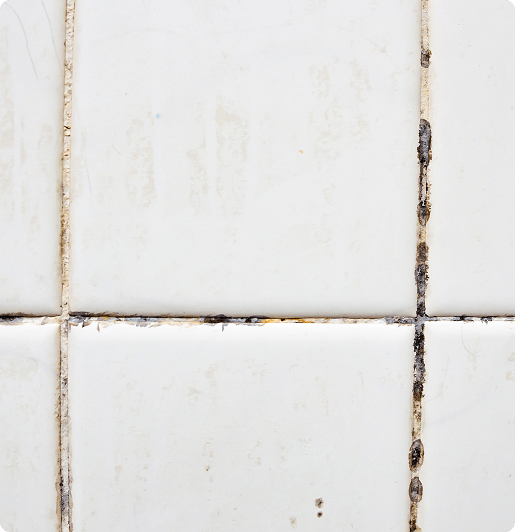
Mould in joints that will not clean | Full grout replacement |
Crumbling or sections missing | Full grout replacement |
Efflorescence (white salt deposits) | Replacement + waterproofing check |
Discoloured but structurally solid | Colour restoration or resealing |
Over 10 years old, widespread dullness | Full grout replacement |
Hollow tiles or failed adhesive | Tile removal + re-lay + regrout |
Selecting the right grout type is one of the most important decisions in any grout replacement project. The wrong grout in the wrong location leads to premature failure, sometimes within weeks.
Sanded grout contains fine quartz sand particles. It is designed for joints wider than 3mm. The sand gives the grout body and prevents shrinkage cracking in wide joints. It is the standard choice for floor tiles, large-format tiles, and most outdoor surfaces.
Unsanded grout is smoother and formulated for narrow joints under 3mm. It bonds more strongly to vertical surfaces and is less likely to scratch delicate tile surfaces like polished porcelain or glass. It is the standard choice for shower walls, mosaic tiles, and narrow-joint installations.
Epoxy grout is a two-part system: Part A (resin) and Part B (hardener) that cures through a chemical reaction rather than drying. It is non-porous, does not absorb moisture, resists mould growth, and does not require sealing. It is the highest-performance grout available.
Polymer-modified grout is a cement-based grout blended with polymer additives for improved flexibility, adhesion, and weather resistance. It is the preferred choice for outdoor installations, balconies, terraces, and pool surrounds, where thermal expansion and UV exposure cause standard cement grout to crack.
Selecting the right joint filler determines the lifespan and maintenance of your tiled surfaces. Traditional cement grout is a porous, budget-friendly option that requires regular sealing. In contrast, two-part epoxy grout forms an impermeable, chemical-resistant barrier that prevents mould growth and water penetration without ever needing sealer.
Feature | Cement-Based Grout | Epoxy Grout |
Cost | Lower upfront | Higher upfront, lower long-term |
Durability | 5 ton15 years | 20+ years |
Porosity | Porous (absorbs moisture) | Non-porous |
Stain resistance | Moderate, sealing required | Excellent, no sealing needed |
Mould resistance | Low to moderate | Very high |
Chemical resistance | Low | High |
Colour stability | Fades over time | Colour-stable |
Application | Easy, DIY possible | Requires experienced installer |
Working time | 30–60 minutes | 20–30 minutes (temperature sensitive) |
Best for | Dry floors, splashbacks, low-traffic | Showers, pools, commercial, wet areas |
Cost is the most searched question attached to grout replacement. Here is a clear, honest pricing guide based on South East Queensland market conditions.
Job Type | Estimated Cost (AUD) | What Is Included |
Small shower recess (1–2 m²) | $500 – $1000 | Grout removal, re-grout, finishing |
Full bathroom floor and walls (up to 10 m²) | $1000 – $2000 | Labour + materials |
Balcony grout replacement (10–25 m²) | $1200 – $3,000 | Polymer-modified grout, drainage check |
Commercial bathroom or kitchen (25 m²+) | $2,000 – $5,000+ | Epoxy grout, after-hours scheduling available |
Shower grout replacement with epoxy grout | $500 – $900 | Higher material cost, significantly longer lifespan |
Grout removal only (machine grinding) | $150 – $300 | Quoted separately from grout application |
Silicone corner replacement | $100 – $250 | In addition to grout replacement cost |
Same-day or urgent grout replacement | POA | Call Aquatech Grouting for availability |
All prices are indicative estimates for South East Queensland. Final cost depends on tile type, joint width, surface area, existing grout condition, and access. Contact Aquatech for a free written quote.
Several variables influence what you will actually pay:
Understanding the professional grout removal and replacement process tells you what you are actually paying for and shows you why cutting corners leads to early failure.
Before any tools touch the surface, a professional inspects the area thoroughly. They tap tiles to check for hollow spots (failed adhesive bond). They look for signs of water damage, efflorescence, or compromised waterproofing membrane. They measure joint widths to confirm the correct grout type.
This assessment determines whether grout replacement alone is sufficient or whether tile removal, waterproofing repair, or substrate work needs to happen first.
The old grout is removed using an oscillating multi-tool with a carbide grout removal blade, or an angle grinder fitted with a diamond-tipped grout removal blade. For very tight joints, a manual grout rake is used.
Grout must be removed to a minimum depth of 2–3mm. This is the critical depth. New grout needs this purchase to bond correctly and form a durable joint. Applying new grout over shallowly removed or untouched old grout is the single most common cause of early grout failure in DIY jobs.
After mechanical removal, all dust, loose debris, and grout particles are vacuumed from the joints. Any efflorescence deposits are treated with a diluted acid wash and rinsed thoroughly. The joints must be clean, dry, and free of contamination before new grout is applied.
The appropriate grout type is selected and mixed to the correct consistency. For cement-based grout, this is a peanut butter consistency, thick enough to hold shape but workable. For epoxy grout, Part A and Part B are combined and used within the working time window (20–30 minutes in Queensland conditions).
Grout is pressed into the joints using a rubber grout float held at a 45-degree angle. This angle ensures maximum compaction into the full depth of the joint. Work is done in manageable sections to prevent premature drying.
When the grout begins to set (but before it fully hardens), a damp sponge and clean water are used to remove the grout haze from the tile surface. This requires multiple passes with clean water. Final buffing with a dry cloth removes any remaining film.
Cement-based grout requires a penetrating sealer applied after full cure. The cure time is 24–72 hours depending on temperature, humidity, and grout brand. Penetrating sealers absorb into the grout surface and block moisture and staining agents without altering the joint appearance.
Epoxy grout does not require sealing.
In showers and wet areas, the floor-to-wall transition joints and internal corners use flexible silicone sealant, not grout. During a professional regrout, the old silicone is fully removed and replaced with fresh, mould-resistant silicone. This is a non-negotiable part of a proper shower grout replacement job. Leaving old silicone in place while regrouting guarantees cracking at these joints within months.
Shower grout replacement is the most common and most critical grout job in residential properties. Getting it wrong is expensive. Getting it right is one of the best maintenance investments you can make in your home.
The shower is the most demanding environment for grout in the average home:
For shower regrouting, epoxy grout is almost always the right choice. Here is the direct comparison:
A shower regrouted with cement grout costs less upfront but needs resealing every 1–2 years and replacement again within 8–15 years. A shower regrouted with epoxy grout costs more upfront, needs no sealing, resists mould completely, and can last 20+ years without replacement.
Over 20 years, the total cost of epoxy grout regrouting is typically lower than the cumulative cost of multiple cement grout cycles.
New grout applied over old grout without full removal will fail, usually within weeks. The bond between new and old grout is poor. Thermal movement cracks the thin new layer. Moisture works into the gap. You end up with the same problem you started with, plus the cost of doing the job correctly this time.
This is the most common DIY shower grout replacement mistake.
Bathroom grout replacement covers floors, walls, shower recesses, and sometimes bath surrounds. The question homeowners often face is: do I replace all the grout at once or just the worst sections?
Full bathroom grout replacement makes sense when:
Spot replacement makes sense when:
Be aware that new grout in a section may not match the colour or tone of aged grout elsewhere in the bathroom even if you order the identical product. Existing grout yellows, darkens, or fades with age. This colour variation is unavoidable.
Balcony grout replacement is significantly different from indoor regrouting. Queensland’s subtropical climate creates conditions that accelerate outdoor grout deterioration faster than indoor areas.
UV radiation breaks down the binding agents in standard cement grout over time, especially on north-facing balconies with direct sun exposure
Standard cement grout is not the right choice for most Queensland balcony applications. Better options are:
When you search for grout replacement near me, you want someone who understands your specific conditions, not a generic national service that sends a different contractor each time.
Many homeowners attempt grout replacement themselves. For some jobs, this is perfectly reasonable. For others, it leads to costly mistakes that a professional then has to fix, often at greater cost than the original job would have been.
DIY is achievable when
Do not DIY when:
The most expensive DIY mistake in grout replacement is applying new grout over old without full removal. The bond fails. The new grout cracks. The waterproofing does not seal. And a professional has to remove everything and start from scratch.
Commercial grout replacement involves different standards, materials, and logistics compared to residential jobs. If you manage a commercial property, here is what you need to know.
Grout in commercial food preparation areas must comply with Australian food safety standards. Under the Food Standards Code, surfaces in food handling areas must be non-porous, impermeable, easy to clean, and resistant to chemicals used in commercial sanitisation.
Standard cement grout fails on every one of these criteria. It is porous, absorbs bacteria, is damaged by commercial cleaning agents, and is nearly impossible to sanitise effectively.
Epoxy grout is the only grout type that meets food safety requirements in commercial kitchens. It is non-porous, completely impermeable, and resistant to commercial-grade cleaning chemicals including bleach, chlorine, and caustic soda.
Commercial wet areas, change rooms, shower facilities, pool surrounds, and food processing areas have specific slip resistance requirements under Australian Standards AS 4586. Grout selection and joint profile affect the overall slip resistance rating of a tiled surface. A professional grout replacement contractor considers slip resistance requirements as part of specification selection.
Most commercial grout replacement jobs are scheduled outside business hours to avoid disruption to operations. Aquatech Grouting is available for the following:
The difference between a professional grout replacement job and a DIY attempt is not just about equipment; it is about knowledge, decision-making, and accountability.
Every professional grout replacement contractor removes grout to at least 2–3mm depth using mechanical equipment. This ensures the new grout has proper purchase to form a strong, durable bond. DIY jobs frequently stop at the surface, creating the illusion of fresh grout that fails within months.
The wrong grout in the wrong location fails fast. A professional matches grout type (sanded, unsanded, epoxy, polymer-modified) to the specific joint width, tile type, surface location, and use case. This single decision has the largest impact on how long the job lasts.
Professional grout replacement includes an assessment phase that DIY does not. A specialist checks for hollow tiles (failed adhesive), water-damaged substrates, and compromised waterproofing membranes before applying new grout. Grouting over these problems conceals them temporarily and makes them more expensive to fix later.
Epoxy grout requires fast, precise application. In Queensland’s warm weather, the working time is 20–30 minutes. Epoxy that sets on the tile surface, not just in the joint, creates a stubborn haze that is extremely difficult to remove from certain tile types. Professional application gets the grout in the joint and off the tile surface before it sets.
Aquatech Grouting is a specialist regrouting company. We work exclusively on grout replacement, tile repairs, and regrouting, not general handyman work. That focus means our team has done thousands of grout jobs across South East Queensland and we know what each surface type, tile type, and location demands.
Whether your shower has been growing mould for two years, your balcony has cracked grout after last summer, or your commercial kitchen needs food-safe regrouting before your next inspection, we can help.
Contact us for a free written quote. We provide services in Brisbane, the Gold Coast, and the Sunshine Coast, including all major suburbs and regional areas throughout South East Queensland.
A single shower recess takes 2–4 hours for grout removal and 1–2 hours for application. A full bathroom (floor and walls) typically takes a full day. Allow 24–72 hours after the job before exposing new grout to water or foot traffic.
Yes, in almost all cases. Grout replacement does not require tile removal. The grout is mechanically ground out of the joint while the tiles remain in place. Tiles only need removal when they are cracked or hollow, or when the waterproof membrane beneath needs repair.
Cement grout with regular sealing: 8–15 years. Cement grout without sealing: 5–8 years. Epoxy grout: 20 years or more with minimal maintenance.
Inspect shower grout every 3–5 years. In average conditions, replacement is needed every 8–15 years. Clear indicators that replacement is overdue: mould that returns after cleaning, joints that crumble when touched, and water staining on adjacent surfaces.
Grout repair patches isolated damaged sections. Grout replacement removes all the grout from the surface and fills fresh grout throughout. Repair works for minor isolated damage. Replacement is needed for widespread failure, mould, crumbling, or grout that is more than 10–15 years old.
No. This is the most common cause of early grout failure in DIY jobs. New grout applied over old without proper removal has no mechanical bond. It cracks quickly, allows water ingress, and must eventually be removed entirely for the job to be done correctly.
For wet areas, yes, almost universally. Epoxy grout in a shower costs more upfront but lasts 20+ years, needs no sealing, resists mould completely, and resists staining. Over a 15–20 year period, the total cost of ownership for epoxy grout is typically lower than for cement grout that needs regular sealing and replacement cycles.
We try to accommodate urgent requests where our schedule allows. Contact Aquatech Grouting directly at aquatechgrouting.com.au to check availability. We service Brisbane, the Gold Coast, and the Sunshine Coast.