


Most people approaching this question have already been through at least one unsatisfying answer online, a number pulled from a national average with no context, no breakdown, and no understanding of the conditions that make a shower screen installation more or less complex. This guide is different.
A shower screen installation in South East Queensland costs between $400 and $4,500 or more, depending on the screen type, glass specification, configuration, site conditions, and the geographic market. Every one of those variables is explained in full below, with the specific numbers that apply to Brisbane, the Gold Coast, and the Sunshine Coast in 2026.
Screen Type | Supply Only |
Fully Installed (SE Qld) |
Framed alcove (standard) | $200 to $450 | $400 to $750 |
Semi-frameless sliding door | $400 to $800 | $700 to $1,400 |
Frameless pivot door | $600 to $1,200 | $1,200 to $2,200 |
Frameless corner screen | $900 to $1,800 | $1,800 to $3,200 |
Frameless walk-in screen | $800 to $1,600 | $1,500 to $2,800 |
Fluted glass frameless | $900 to $1,800 | $1,600 to $3,000 |
Custom frameless (non-standard) | $1,200 to $2,500+ | $2,200 to $4,500+ |
These are installed prices inclusive of supply, labour, hardware, and standard silicone sealing in South East Queensland for 2026. They do not include tile repair, waterproofing rectification, or long-distance travel surcharges.
The installed cost of a shower screen comprises three components that interact: the glass itself, the hardware that holds the glass, and the labour to fit both precisely to your specific bathroom geometry. Changing any one of these components changes the total.
Understanding the relationship between the cost components helps you evaluate quotes, understand why one installer’s price is higher than another’s, and make a smarter product choice for your bathroom.
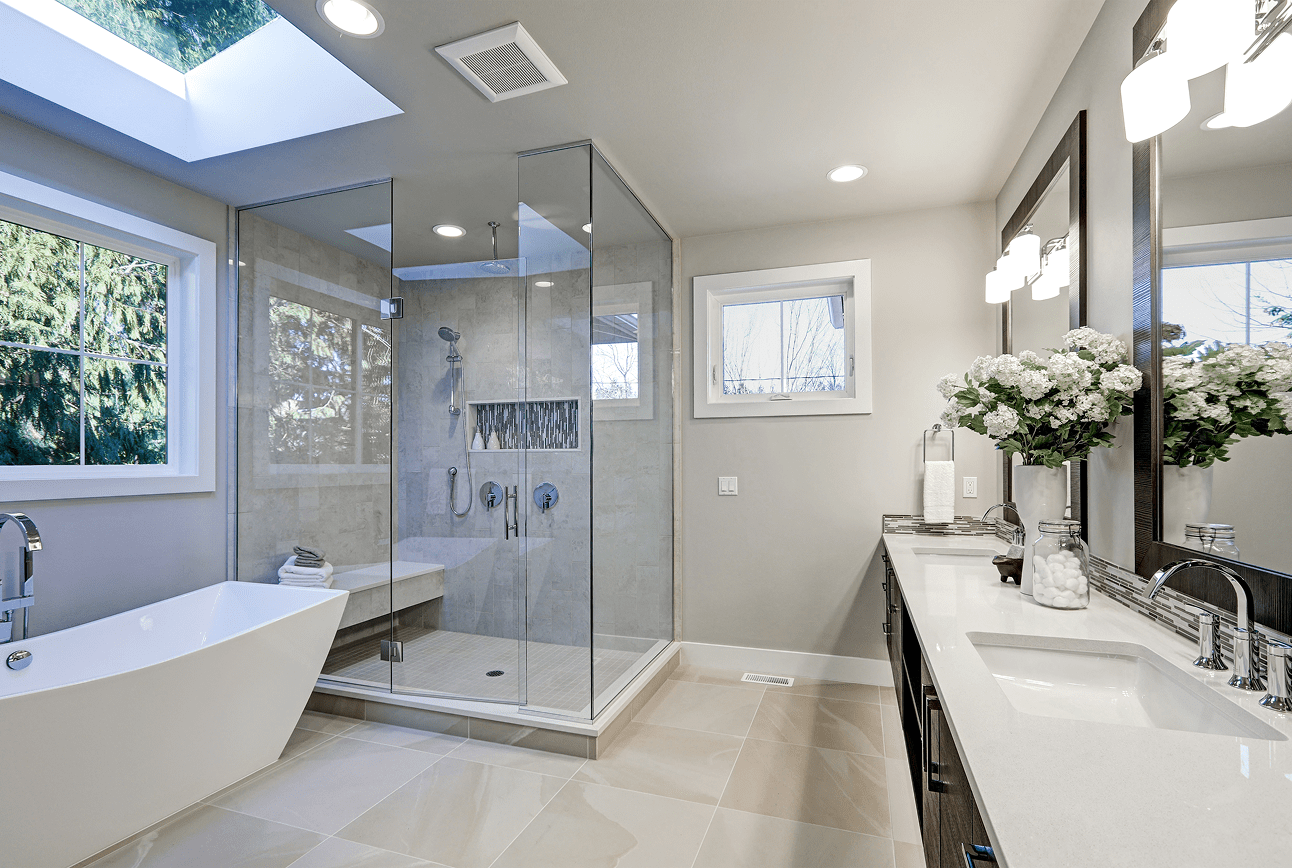
Glass is the primary material cost in any shower screen job. In Australia, all glazing used in wet areas must comply with AS/NZS 2208:1996, which mandates safety glazing, meaning toughened or laminated glass in all positions where human contact during normal use is possible. A shower screen, by definition, falls under this standard. Any installer using non-compliant glass is creating a safety liability, not a bargain.
Toughened glass is produced by heating standard soda-lime glass to above 620 degrees Celsius and then rapidly cooling it. This thermal process puts the outer surfaces of the glass into compression and the interior into tension, a stress state that gives the finished product approximately four times the impact strength of annealed glass and causes it to shatter into small granular fragments rather than sharp shards when it does break.
The thickness of the toughened glass used in a shower screen has a direct relationship to the screen’s structural performance and its installation cost. A 10 mm frameless glass panel weighs approximately 25 kilograms per square metre. A 6 mm semi-frameless glass panel weighs approximately 15 kilograms per square metre. That difference in weight drives differences in handling difficulty, installation time, and the structural capacity of the hardware required to support the glass safely.
Glass Thickness | Weight per m² | Application | Supply Cost per m² |
4mm toughened | ~10 kg | Budget framed screens | $80 to $120 |
6mm toughened | ~15 kg | Framed and semi-frameless | ~15 kg |
8mm toughened | ~20 kg | Mid-range frameless | $180 to $250 |
10mm toughened | ~25 kg | Premium frameless | $240 to $380 |
10mm fluted/reeded | ~25 kg | Specialty frameless | $320 to $520 |
10mm tinted (grey, bronze) | ~25 kg | Contemporary frameless | $300 to $450
|
The relationship between glass thickness and price is not linear. The 10mm glass does not cost only 66% more than the 6mm glass. The tempering process for thicker glass uses more energy, the handling and transport requirements are more intensive, and the fabrication tolerances are tighter because thick glass has less tolerance for thermal stress during cutting.
The hardware holding a frameless shower screen to your wall is doing structural work. Pivot hinges on a frameless screen that carries the full rotational load of a glass door that weighs 15 to 25 kilograms every time it opens and closes; that load is transferred through the hinge into the wall fixing. The wall fixing must go into a substrate capable of carrying that load: tile adhesive bed, mortar, and preferably into a timber stud or concrete, not just a plasterboard panel.
Hardware finish choices, such as chrome, brushed nickel, matte black, gunmetal, and brass, affect the purchase cost of the hardware components themselves. Matte black hardware is the most requested finish in SE Queensland right now, driven by the strong current trend toward dark tapware and fittings in Brisbane and Gold Coast renovation markets. The price premium for matte black hardware over chrome baseline is typically $80 to $200 per screen, depending on the number of components.
Hardware Finish | Price Relative to Chrome Baseline |
Chrome | Baseline |
Brushed nickel | + $50 to $150 |
Matte black | + $100 to $250 |
Gunmetal/charcoal | + $100 to $250 |
Brushed brass/gold | + $150 to $400 |
The opinion here is straightforward: choose a hardware finish once and choose it to match your tapware. Mismatched hardware and tapware finishes are the single most common bathroom renovation regret that experienced renovators report. It is a small decision that has a large visual impact every day.
Every frameless and semi-frameless shower screen is made to measure. A fabricator cannot template a bathroom without measuring it. And bathrooms in Queensland, particularly those built before the 1990s, are rarely perfectly square.
When walls deviate from plumb or square by more than 5 to 10mm across the shower opening width, the glass panels must be cut to accommodate the angle. A glass panel that is not parallel to its wall at the top will create a visible gap that cannot be sealed with silicone. The fabricator must account for the actual site geometry, not the ideal geometry.
This is why a measure-and-quote visit is not optional for frameless screens. An installer quoting from photographs or described measurements is not quoting a frameless screen; they are guessing. The risk of that guess is borne by the homeowner when the glass arrives and does not fit.

Frameless shower screens are the most searched and most requested product category across SE Queensland. They are also the category with the most price variability because the variables that drive frameless screen costs, such as glass area, configuration, hardware specifications, and site conditions, interact with one another.
A frameless shower screen is structurally distinct from a framed or semi-frameless screen in one critical way: the glass itself is the structural element. There is no aluminium extrusion carrying the glass. The glass is held by discrete hardware wall channels, floor channels, hinges, and clamps that attach directly to the glass edges.
The glass must be thick enough to span the distances between those fixing points without deflecting under its own weight or under the load of someone leaning against it. This is why 10mm glass is the standard specification for frameless screens and why 6mm glass is not used in frameless applications.
The relationship between frameless screen configuration and installed cost is direct:
Configuration | Glass Area (approx.) | Typical Installed Cost |
Single fixed panel | 0.8 to 1.4 m² | $900 to $1,600 |
Single pivot door (alcove) | 1.4 to 2.0 m² | $1,500 to $2,600 |
Frameless sliding door | 1.2 to 1.8 m² | $1,400 to $2,400 |
Corner frameless (panel + door) | 1.5 to 2.5 m² | $1,800 to $3,200 |
Walk in a frameless | 1.5 to 2.5 m² | $1,500 to $2,800 |
Custom / non-standard | Varies | $2,200 to $4,500+ |
These prices are for standard clear 10mm toughened glass with chrome hardware. Upgrading to matte black hardware adds $80 to $200. Upgrading to fluted glass adds $200 to $500, depending on panel area. Upgrading to tinted glass adds $100 to $300.
This is the question most SE Queensland homeowners wrestle with when they are budgeting a bathroom renovation. The price difference between a frameless screen and a good semi-frameless screen is typically $400 to $900 installed. Whether that gap is worth crossing depends on how you are using the property.
For an owner-occupied home where you plan to live for five years or more, the frameless screen justifies the cost through daily usability and long-term maintenance. The frameless screen has no frame tracks collecting soap scum, no aluminium channels corroding in SE Queensland’s humidity, and no aluminium to tile seal degrading with cleaning product exposure. A well-installed frameless screen on 10mm glass with quality hardware will outlast a semi-frameless screen by five to ten years in most conditions.
For a rental property or a bathroom that is being refreshed ahead of a sale, the semi-frameless screen is a rational choice. The aesthetic difference between a well-chosen semi-frameless screen and a frameless screen is meaningful but not transformative in a bathroom that is otherwise at a mid-range fitout level. The cost saving is real, and the product performs well.
The position here is clear: if you are staying on the property, go frameless. If you are selling or renting, go semi-frameless unless the property’s price point demands premium specifications.
Semi-frameless screens occupy the space between framed and frameless, both in cost and in structural approach. The screen uses 6mm toughened glass compliant with AS/NZS 2208:1996, supported by anodised aluminium channels at the perimeter. The central glass panel itself has no frame, giving the visual impression of a frameless screen from a distance.
The anodised aluminium channel is a more important component than most homeowners realise. Anodisation is an electrochemical process that converts the outer surface of the aluminium into aluminium oxide, a ceramic compound that is significantly harder and more corrosion-resistant than bare aluminium. In SE Queensland’s coastal and high-humidity conditions, anodised aluminium dramatically outperforms plain aluminium in corrosion resistance.
A semi-frameless screen with a powder-coated frame in matte black will look good for years in a Gold Coast bathroom. A semi-frameless screen with a plain aluminium frame of inferior quality will begin to oxidise and pit within three to five years in the same environment.
Configuration | Typical Installed Cost |
Sliding door semi-frameless (single panel) | $700 to $1,100 |
Sliding door semi-frameless (double panel) | $900 to $1,400 |
Pivot door semi-frameless | $750 to $1,200 |
Panel and door combination | $800 to $1,350 |
Over-bath semi-frameless screen | $650 to $1,100 |
The maintenance consideration that most suppliers do not volunteer: the tracks of sliding semi-frameless screens collect soap residue, hair, and mineral deposits from hard water. South East Queensland’s water supply, particularly in Brisbane’s inner suburbs, carries moderate hardness that leaves calcium carbonate deposits on glass and in aluminium tracks over time. Weekly track cleaning with a mild acid (white vinegar or a commercial bathroom cleaner) prevents this buildup from becoming a structural problem for the rollers and bearings.
A framed shower screen uses thinner glass, typically 4mm to 6mm toughened, supported within a continuous aluminium extrusion frame around all four edges of the glass panel. The frame carries the structural load, so the glass specification requirement is lower than for frameless or semi-frameless designs.
The installed cost of a standard framed alcove screen in SE Queensland runs from $400 to $750, the most accessible price point in the market.
The practical case for framed screens is straightforward and honest: they work. They keep water in the shower, they satisfy the AS/NZS 2208:1996 safety glazing requirement, and they last a reasonable service life. For rental properties, for bathrooms that are not the main bedroom en-suite, and for situations where the renovation budget is fixed at a level where frameless is not achievable, a framed screen is a sensible solution.
The practical case against framed screens is equally straightforward: the frame system is the maintenance liability. The rubber seals around the frame perimeter degrade under exposure to cleaning products and SE Queensland humidity, typically within three to seven years. Once the seals harden and shrink, the frame becomes a mould harbour. Frame corrosion is faster in coastal areas. The salt aerosol environment of the Gold Coast and Sunshine Coast coastlines accelerates oxidation of aluminium that is not properly anodised or coated.
The lifecycle cost of a framed screen, factoring in seal replacement, frame cleaning labour, and the eventual replacement cost, narrows the gap with semi-frameless options over ten years. This does not change the fact that framed screens are the right choice in many situations. But homeowners choosing framed screens for cost reasons should factor in maintenance expectations, not just purchase price.
Fluted glass, called reeded glass or ribbed glass interchangeably, has been the fastest-growing specialty glass category in SE Queensland’s renovation market over the past three years. The surface texture, produced by rolling or moulding vertical parallel ribs into the glass at 3mm to 6mm groove depth during manufacturing, achieves two things simultaneously: it obscures visibility at distances beyond 300mm while transmitting the full light load through the panel, and it introduces a material texture that works with the natural material palettes dominant in current Queensland renovation design.
The aesthetic context matters here: fluted glass does not exist in isolation as a shower screen. It works because the broader design language around it, timber-grain cabinetry, stone benchtops with visible mineral veining, handmade ceramic tiles, and matte black tapware, shares the same design principle of texture over uniformity. A fluted glass shower screen in a bathroom with white laminate cabinetry and chrome tapware is a design mismatch, not a design upgrade.
Fluted glass carries a price premium over clear glass for a specific reason: the moulding or rolling process used to create the surface texture is an additional manufacturing step.
The glass must be formed before the tempering process; toughened glass cannot be cut or shaped after tempering, which means the fluted sheet must be ordered in the correct dimensions from the outset. There is no cutting to size from a large fluted sheet, the way there is with clear glass. This makes offcuts unusable and increases wastage, which is reflected in the material price.
Glass Type | Premium Over Clear 10mm | Installed Single door Frameless (SE Qld) |
Clear 10mm toughened | Baseline | $1,200 to $2,200 |
Frosted 10mm | + $80 to $150 | $1,300 to $2,350 |
Fluted/reeded 10mm | + $200 to $500 | $1,600 to $3,000 |
Tinted grey 10mm | + $100 to $300 | $1,400 to $2,500 |
Tinted bronze 10mm | + $100 to $300 | $1,400 to $2,500 |
The local supply of fluted glass panels in Brisbane and the Gold Coast has improved significantly since 2022, which has reduced both lead times and the cost premium compared to two years ago. For a standard frameless shower with a single pivot door, expect to pay $1,600 to $2,800 installed for a fluted glass option in SE Queensland in 2026.
The cleaning requirement for fluted glass is slightly more involved than that of clear glass: the rib channels can collect soap residue if not wiped down after each shower. A squeegee does not work as effectively on fluted glass as it does on clear glass; a damp microfibre cloth wiped vertically along the ribbing direction is more effective. This is not a deterrent to fluted glass as a choice, but it is a factual maintenance reality that installers sometimes omit from the sales conversation.

A custom shower screen is any screen where the dimensions, angles, or specifications fall outside what can be accommodated by a standard fabricated product. Custom screens are required more often than most homeowners expect, particularly in SE Queensland’s older housing stock.
Queensland homes built in the 1950s through to the early 1980s were constructed to standards and with materials that did not prioritise bathroom geometry. Shower recesses in homes of that era frequently have:
A frameless screen installed under any of these conditions without custom glass fabrication will have visible gaps at the wall junction, silicone seals under tension that will fail early, or hardware that cannot be fitted flush to the wall surface.
The custom screen process involves two stages that standard screens do not require. The first is a detailed templating visit, either physical templating using a cardboard or acrylic template that captures the exact geometry of the recess or digital laser measurement that produces a precise digital model. The second is bespoke glass fabrication: each panel is cut and tempered to the exact geometry documented during templating.
Factor | Standard Screen | Custom Screen |
Measurement method | Standard site measure | Physical or laser templating |
Fabrication | Stock cut or semi-bespoke | Fully bespoke glass cutting and tempering |
Lead time | 3 to 10 days | 10 to 21 days |
Installation time | 2 to 3 hours | 3 to 6 hours |
Typical installed cost | $700 to $2,200 | $2,000 to $5,000+ |
The templating step is not something to rush or skip. A template taken on an overcast day versus a sunny day does not produce different results, but a template taken before the bathroom tiles are laid produces a different result from one taken after tiling wall tiles reduce the opening width of a shower recess by the thickness of the tile and adhesive, typically 10 to 20mm. The sequence of work matters: tile first, then template, then order the glass.
To illustrate how dramatically custom dimensions escalate cost, consider the scenario of replacing a premium floor-to-ceiling custom screen measuring 180cm in width by 285cm in height (1800mm x 2850mm). A screen of this height is highly unusual in residential wet areas and represents a prestige class architectural feature designed to seat directly into a ceiling recess.
At a standard 10mm thickness, a toughened glass panel of 180cm by 285cm has a surface area of 5.13 square metres and weighs approximately 128 kilograms. Handling a single glass panel of this weight is not a standard two-glazier job. It requires a minimum of three to four qualified glaziers, specialized suction lifters, structural floor-to-ceiling structural channels, and heavy-duty pivot hardware or mechanical wall clamps to secure the glass safely.
The glass fabrication cost alone for a 180cm by 285cm toughened safety panel exceeds $1,500 due to the specialized handling and tempering requirements of oversized sheets. For property owners looking to replace a 180 cm x 285 cm (often entered in search queries as a 180 cm x 285 cm replace or replacement shower screen cost) shower screen in Southeast Queensland, the combined cost of oversized glass fabrication, structural hardware, transport, and multi-person glazier teams ranges from $3,800 to $6,500. Attempting to install a panel of this magnitude using budget hardware or without professional glazier teams is a severe structural safety risk.
Glazier and shower screen installer labour rates in SE Queensland sit between $75 and $120 per hour in 2026, depending on the trade classification, the complexity of the work, and the operational structure of the business.
The hourly rate, however, is not the primary driver of labour cost variation between quotes. The driver is how much time each installer estimates the job will take. An experienced installer who has fitted the same product category hundreds of times will estimate time more accurately and often more efficiently than a less experienced operator. A quote that is lower because of a lower hourly rate is not automatically a cheaper job if the estimated hours are higher or the quality of work is lower.
Call-out fees represent the minimum charge that makes each job viable for the installer, typically equivalent to one to two hours of labour, or $100 to $200, regardless of how straightforward the job is. This is not a negotiating lever. An installer who waives their call-out fee entirely is usually recovering it through the product margin or a higher per-hour rate.
Installation Type | Typical Duration | Typical Labour Cost |
Framed / semi-frameless straight swap | 1 to 2 hours | $100 to $240 |
Semi-frameless (new installation) | 2 to 3 hours | $150 to $360 |
Frameless pivot door (single) | 2 to 4 hours | 2 to 4 hours $200 to $480 |
Frameless corner screen | 3 to 5 hours | $300 to $600 |
Custom frameless (complex) | 4 to 8 hours | $400 to $960 |
What the labour cost covers in a standard installation:
What commonly costs extra and should be stated in any honest quote:
Potential Extra | Why It Occurs | Approximate Additional Cost |
Travel surcharge | Job location beyond the normal service radius | $50 to $150 |
Tile damage repair | Tile cracks or breaks during screen removal | $80 to $300+ |
Silicone removal (heavy old sealant) | Excessive silicone from the previous install | $50 to $100 |
Wall repair/patching | Damage to the wall substrate during removal | $80 to $250 |
Same day or urgent booking premium | Rushed timeline | $100 to $200 additional |
A scenario that illustrates the hidden cost risk: a homeowner in Indooroopilly books an installer to replace a semi frameless screen that has been in place for eighteen years. The quote is $850 all inclusive. During removal, the old screen releases two tiles that have been bonded to the frame silicone for two decades. The tiles crack.
The waterproofing membrane behind them is visible and partially damaged. The installer stops work, correctly they cannot legally proceed without the waterproofing being assessed and rectified by a licensed waterproofer. The homeowner now faces a separate waterproofing job before the screen can be installed. The $850 job becomes a $1,400 project.
This scenario is not unusual. It is a predictable risk of older bathroom renovations. An experienced installer will look at the age and condition of the bathroom before quoting and flag whether a waterproofing investigation is warranted. An inexperienced one or one competing purely on price may not.

Shower screen replacement, pulling out an existing screen and installing a new one, is the most common job type across SE Queensland, and it carries a specific set of cost considerations that new installations do not.
The total installed cost of a replacement is generally equivalent to a new installation of the same screen type. In some situations, it costs slightly more, for reasons that are structural rather than commercial.
Removal of the old screen takes time. Cutting silicone seals without damaging tiles, extracting glass panels from their channels safely, and detaching wall fixings without cracking the substrate; these steps take one to two hours even on a simple job. That time is either included in the quoted price or it is not. It should be.
Old silicone is a more significant obstacle than most homeowners expect. Silicone does not peel off tiles the way masking tape peels off a painted wall. It chemically bonds to the tile glaze and grout lines. Removing it without damaging the tile surface or the grout requires careful blade work and patience. Silicone residue left in place creates a problem for the new screen: fresh silicone does not bond well to cured silicone, so a new seal applied over the old residue will fail within 1 to 2 years. Every professional installation requires silicone removal to be done properly.
This is a practical question that most homeowners have, but that most online content does not address clearly. Here is the framework for the decision:
Replace the screen immediately when:
Repair rather than replace when:
Scenario | Repair Cost | Replacement Cost | Recommendation |
The silicone seal failed only | $150 to $350 | $700 to $2,000+ | Repair |
Single hinge failed, parts available | $200 to $450 | $1,200 to $2,500 | Repair |
Glass is cracked or broken | $200 to $450 | $1,200 to $2,500 | Repair |
Glass is cracked or broken | Not repairable | $300 to $800 (glass only) | Replace glass |
Frame corroded or bent | Not viable | $700 to $1,400 | Replace screen |
Multiple failures in the older screen | $400 to $800 | $1,200 to $2,500 | Replace screen |
Water behind tiles, origin unclear | Investigate first | ariable | Investigate cause |
On frameless screens with intact hardware, and on some semi-frameless screens with intact channels, it is possible to replace the glass panel only without replacing the full screen assembly. This is viable when the hardware is in good condition, the glass is the only failed component, and replacement glass can be fabricated to the same dimensions.
Glass Only Replacement Scope | Typical Cost |
Single fixed frameless panel (10mm) | $300 to $700 |
Single frameless door (10 mm) | $350 to $800 |
Over-bath framed glass (6 mm) | $150 to $350 |
Semi-frameless sliding door glass only | $200 to $450 |
The caveat is lead time: glass-only replacement requires the installer to measure the broken panel, order glass to that specification, and return to fit it. The gap between measure, order, and fit is typically five to fourteen days. If the bathroom cannot be used in the interim, that is a planning consideration.
South East Queensland is a geographically diverse market. The three regions have different housing stock ages, different coastal exposure conditions, different supplier density patterns, and slightly different pricing dynamics.
Brisbane has the highest concentration of shower screen suppliers and qualified glaziers in SE Queensland, which generally creates a more competitive pricing environment for straightforward jobs. Inner Brisbane and the inner northern, southern, and eastern suburbs are well served by multiple operators.
Outer suburban areas, Ipswich, Logan, Moreton Bay, and Redland City, are served by both city-based and locally based operators. City-based operators typically add a travel surcharge for jobs more than thirty to forty minutes from their base. Local operators in these outer areas may charge comparable hourly rates without the surcharge but may have longer lead times or narrower product ranges.
Brisbane’s housing stock includes a high proportion of pre 1990 homes, particularly in the inner suburbs of Paddington, Ascot, Annerley, Greenslopes, and similar areas where non-standard shower geometries are common enough to make custom or semi-custom screens the norm rather than the exception.
Screen Type | Brisbane Typical Installed Price |
Framed (alcove, standard) | $400 to $700 |
Semi-frameless (sliding, standard) | $700 to $1,400 |
Frameless pivot door | $1,200 to $2,400 |
Frameless corner screen | $1,800 to $3,200 |
Custom frameless | $2,200 to $4,500 |
The Gold Coast market is large, active, and driven by high renovation volumes across both established suburbs and new build developments along the corridor from Coomera to Coolangatta.
Coastal proximity is a material consideration for screen choice on the Gold Coast, as it is not in inner Brisbane. Salt aerosol concentration is significantly higher within two kilometres of the coastline, Surfers Paradise, Broadbeach, Burleigh Heads, and Coolangatta, and this has a measurable effect on the corrosion rate of aluminium frame systems. Framed and semi-frameless screens in salt-exposed locations should specify marine-grade anodised aluminium frames, not standard aluminium. Frameless screens, which have minimal aluminium surface area in the hardware, fare better in coastal conditions than frame-heavy systems.
The humidity dimension is equally significant. SE Queensland’s coastal zones average 65% to 75% relative humidity annually, and Gold Coast coastal bathrooms without adequate ventilation maintain near saturated humidity conditions after shower use. Silicone sealants in these conditions are under sustained biological pressure from mould. Specifying an antifungal silicone rather than standard neutral cure silicone is a meaningful maintenance decision for Gold Coast bathrooms. The cost difference is $20 to $40 on the material, and it can add two to three years to the effective life of the seal.
Screen Type | Gold Coast Typical Installed Price |
Framed (alcove, standard) | $380 to $680 |
Semi-frameless (sliding, standard) | $680 to $1,350 |
Frameless pivot door | $1,150 to $2,300 |
Frameless corner screen | $1,750 to $3,100 |
Custom frameless | $2,100 to $4,200 |
The Sunshine Coast has grown significantly as a renovation and new build market over the past five years, with strong population inflows from Brisbane, interstate migration, and continuing lifestyle-driven renovation activity.
Major Sunshine Coast centres, Maroochydore, Caloundra, Noosa, and Buderim, are well served by both local and Brisbane-based installers. Hinterland areas, such as Maleny, Montville, Mapleton, and Kenilworth, typically attract travel surcharges from Sunshine Coast and Brisbane-based operators, and the pool of available installers is smaller, which can affect lead times.
The Sunshine Coast’s coastal properties share the same salt aerosol and humidity conditions as the Gold Coast coast, and the same hardware specification advice applies: anodised frames and antifungal silicone in high-humidity coastal bathrooms.
Screen Type | Sunshine Coast Typical Installed Price |
Framed (alcove, standard) | $400 to $720 |
Semi-frameless (sliding, standard) | $700 to $1,450 |
Frameless pivot door | $1,200 to $2,450 |
Frameless corner screen | $1,800 to $3,200 |
Custom frameless | $2,200 to $4,500 |
Screen Type | Brisbane | Gold Coast | Sunshine Coast |
Framed (installed) | $400 to $700 | $380 to $680 | $400 to $720 |
Semi-Frameless (installed) | $700 to $1,400 | $680 to $1,350 | $700 to $1,450 |
Frameless Pivot (installed) | $700 to $1,400 | $680 to $1,350 | $700 to $1,450 |
Frameless Pivot (installed) | $1,200 to $2,40 | $1,150 to $2,300 | $1,200 to $2,450 |
Frameless Corner (installed) | $1,800 to $3,200 | $1,750 to $3,100 | $1,800 to $3,200 |
Custom Frameless (installed) | $2,200 to $4,500 | $2,100 to $4,200 | $2,200 to $4,500 |
Cost reduction in shower screen installation is real, but it operates within boundaries that safety standards establish. Reducing cost by specifying thinner glass than is appropriate for the configuration, by using a non-licensed installer, or by accepting a supplier who cannot provide evidence of AS/NZS 2208:1996 compliance is not cost reduction. It is a liability transfer.
Within the boundaries of compliant, properly installed work, the following approaches genuinely reduce cost:
The question of whether a homeowner can install their own shower screen comes up regularly. The honest answer is conditional.
The quality of the installation determines more of the long-term outcome than the quality of the screen. A $2,000 frameless screen installed by a skilled glazier will perform better over fifteen years than a $2,500 screen installed by someone who got the hinge position slightly wrong and never quite fixed the door alignment.
The selection criteria that matter are not the ones most commonly listed:
Questions to ask before booking:
An installer who answers all of these clearly, without defensiveness or evasiveness, is one who is operating a professional business. The answers themselves matter, but so does the manner in which they are given.
The most common mistake in the shower screen buying process is choosing the wrong product. It is choosing the right product from the wrong installer.
A frameless screen on 10mm toughened glass, properly templated, fabricated to specification, and installed by an experienced glazier with correct hardware positioning and quality silicone sealing, will last fifteen to twenty-five years with minimal maintenance. The same screen installed by someone who positioned the pivot hinge 3mm too low will have a door that contacts the frame seal on every opening, wearing the seal within two years, and then leaking at the bottom junction within three.
The price gap between a highly experienced installer and a less experienced one is often $200 to $400 on a standard frameless job. Over fifteen years, that is a fourteen-dollar per year difference in installation cost. No maintenance or remediation scenario makes the cheaper option financially rational over that timeframe.
Get a quote. Ask the questions listed above. Choose the installer you trust to do the job correctly, not the installer who simply provided the lowest number.
Note: Guide prepared for SE Queensland homeowners | June 2026 All pricing is indicative for the South East Queensland market. Prices vary based on glass specification, screen size, hardware finish, site conditions, and individual installer pricing. Get a quote from QBCC-licensed contractors for accurate project-specific pricing.
A shower screen in Australia costs $200 to $450 for supply only, or $400 to $4,500 or more fully installed, depending on the screen type, glass specification, size, and installation complexity. Framed screens are at the lower end, frameless and custom screens at the upper end. In SE Queensland specifically, a standard semi-frameless screen is installed for $700 to $1,400, and a standard frameless pivot door screen for $1,200 to $2,400.
The cheapest option is a standard framed sliding door screen in an alcove configuration, which starts around $400 fully installed in SE Queensland. These use 4mm to 6mm toughened glass in a continuous aluminium frame. They are functional and code-compliant but require more active maintenance, particularly track cleaning and seal inspection, than frameless or semi-frameless options.
Yes, in many cases. This is viable when the frame, channels, and hardware are in good condition and only the glass has been damaged. Glass-only replacement for a frameless panel costs $300 to $700, depending on size and glass type. For semi-frameless screens, replacing the sliding door glass panel costs $200 to $450. The practical limitation is that lead time glass must be measured, ordered, and fabricated to specification, which typically takes five to fourteen days.
A standard framed or semi-frameless replacement takes one to three hours. A frameless single door screen takes two to four hours. A frameless corner screen takes three to five hours. Custom frameless screens or complex multi-panel configurations can take four to eight hours. Lead time from booking to installation to allow for glass ordering and fabrication is typically five to fourteen days for standard screens and ten to twenty-one days for custom work.
For an owner-occupied home where you will live for five or more years, yes, the frameless screen justifies its cost premium through lower maintenance requirements, longer service life, and better bathroom appearance. For a rental property or a bathroom being refreshed ahead of sale, a quality semi-frameless screen delivers strong value at a lower cost. The position here is that the right answer depends on how long you plan to use the bathroom and at what fitout level the rest of the room is specified.
Queensland building requirements mandate that glass used in wet areas comply with AS/NZS 2208:1996, and that wet area waterproofing comply with AS 3740:2010. Any glazing work that forms part of a building, including a shower screen, should be carried out by a suitably qualified trade. In Queensland, this means a QBCC-licensed contractor. Any waterproofing rectification discovered during screen removal must be carried out by a licensed waterproofer before the screen installation proceeds.
A fluted glass frameless shower screen costs $1,600 to $3,000 installed in SE Queensland for a standard single door configuration. The premium over equivalent clear glass is $200 to $500, depending on the total glass area. Fluted glass is a specialty product that requires bespoke fabrication; it cannot be cut from standard sheet, which is the primary driver of the price premium.