

Most homeowners notice the signs months before taking action. Cracked grout along the base of the shower. A persistent mouldy smell that no amount of scrubbing will shift. Tiles that sound hollow when you tap them. By the time water is seeping through the wall, the repair bill has usually gone from manageable to painful.
The good news is that catching it early and regrouting your shower is almost always far cheaper than the alternative. No demolition. No new tiles. No weeks without a functioning bathroom. Just a professional service that restores the waterproofing, cleans up the appearance, and gives your shower another decade of solid life.
In this guide, we break down the real cost to regrout a shower in Brisbane in 2026. You’ll learn what factors affect pricing, how per-square-meter rates vary across states, the difference between DIY and professional regrouting, and when simple fixes are no longer enough.
The average cost to regrout a shower in Brisbane ranges from $350 to $1,500, with most standard jobs falling between $600 and $900. That range sounds wide, but it makes sense once you understand what is actually being priced.
A small corner shower with a single door, intact tiles, and straightforward access will sit at the low end. A large double shower with mosaic tiles, multiple grout line directions, and some waterproofing damage underneath will push toward the top.
Shower Type | Average Cost |
Small shower | $350 to $600 |
Standard shower | $600 to $900 |
Large shower | $900 to $1,500 |
These figures reflect the full service: removal of existing grout, treatment of any mould, application of fresh grout, and sealing. They do not include structural waterproofing membrane repairs, tile replacement, or glass screen upgrades, which are quoted separately.
Understanding what drives the average cost helps you assess whether a quote is fair and identify where you can save.
Labour makes up the bulk of the invoice for any professional regrouting job. Removing old grout alone can take several hours, depending on the existing grout’s hardness and the tile profile being worked around. In Brisbane, skilled tradespeople working on shower regrouting typically charge $50 to $90 per hour. A standard-sized shower typically takes four to eight hours from start to finish, with the labour component costing roughly $200 to $700 per job.
Rates also vary noticeably by state. In New South Wales, regrouting labour typically starts at around $25 per square metre. Victorian tradies often charge from about $37 per square metre and up. In Queensland, the range for a full shower regrouting service is $150 to $391, according to independent marketplace data. Metropolitan areas with higher operating costs, such as Melbourne’s inner suburbs and Sydney’s affluent coastal areas, generally command the highest rates in the country.
The materials themselves account for a much smaller share of the total than most people expect. A standard sanded floor grout costs around $1.50 per kilogram. Unsanded grout for wall joints runs around $3 per kilogram. Both are widely available and appropriate for a standard ceramic tile shower.
Epoxy grout is the premium option and carries a much higher material cost, around $22 per kilogram at retail. For a professional using it at volume, the cost is lower, but it still significantly affects the material component of a quote. Silicone sealant for the corner joints and floor-wall junctions adds another $20 to $40 to the materials bill.
All in, materials for a standard shower regrout typically cost between $80 and $200.
When you put labour and materials together, a professionally regrouted standard shower in Brisbane typically costs $600 to $900 all in. If you want to understand more about the specific products involved, our guide on how to grout tiles walks through the material selection process in plain language.
If you are wondering how much does it cost to regrout a shower floor only, the answer depends on whether you want a spot fix or are treating a deeper problem.
The shower floor takes more abuse than any other part of the wet area. It is constantly wet, constantly walked on, and sits at the lowest point where water pools before draining. Grout on the floor fails faster than wall grout for all of these reasons. Many homeowners want to treat just the floor first before committing to a full regrout of the walls.
Area | Average Cost |
Shower floor only | $250 to $500 |
Wall grout repair | $300 to $700 |
Full shower regrouting | $600 to $1,200 |
Partial regrouting of just the floor makes sense if the wall tiles and grout are still in reasonable condition. But if the floor is failing, there is often a reason: movement, subsidence, or waterproofing failure underneath. A good tradesperson will flag this during inspection rather than just patch over it.
Wall regrouting has its own pricing logic. How much does it cost to regrout shower tiles on the wall specifically? Typically $300 to $700, depending on the tile size, the number of joints, and the grout specification.
The key variable on walls is tile format. A shower tiled in large 300mm by 600mm porcelain slabs has relatively few grout joints per square metre compared to a shower done in 50mm mosaic glass tiles. The mosaic wall will take significantly longer to regrout, adding hours to the labour and considerable additional product.
Material choice matters even more on walls than on floors. Walls are not being walked on, but they face constant moisture exposure and soap scum accumulation. Our detailed guide on epoxy vs cement grout explains the practical waterproofing and maintenance difference between these two product families. In summary, epoxy costs more but dramatically extends the time before you need to regrout again.
Straightforward but significant. Regrouting is priced on a per square metre basis in many cases, so a larger shower means more grout to remove, more product to apply, and more time on site. There is no shortcut to this calculation.
Large-format tiles are easier to work around. Natural stone like marble or travertine requires extra care because the surface is porous and can be stained by grout residue if not handled correctly. Mosaic tiles multiply the labour dramatically because every small tile has joints on all four sides. Herringbone or diagonal layouts add a complexity premium.
Joint width also affects pricing directly: lines narrower than three millimetres require unsanded grout and finer tool control; lines wider than six millimetres need more product and more cleanup. Either extreme adds cost compared to a standard four millimetre joint, worth noting when you request quotes.
Standard sanded grout is the cheapest option and is appropriate for floor joints wider than three millimeters. For narrower wall joints, unsanded grout is used. Epoxy grout is the highest-performance option across both walls and floors but comes at a material cost roughly ten times higher and requires more skilled application because it sets very quickly and does not forgive slow technique.
Hard, intact grout that simply looks stained takes longer to remove than soft, crumbling grout that comes out easily. Paradoxically, showers in worse cosmetic condition often have softer grout that is cheaper to remove. Well bonded old grout needs mechanical grinding tools and significantly more operator time.
It takes a $700 job to a $3,000 job overnight. When water penetrates compromised grout over a long period, it can degrade the waterproofing membrane bonded to the substrate behind the tiles. Regrouting the surface will not fix a failed membrane. If you notice soft spots when pressing wall tiles, water staining on the bathroom ceiling below, or a persistent leak even after surface resealing, read our guide on how to tell if your waterproofing has failed before committing to any surface repair work.
How do you know when regrouting has moved from optional to urgent? These are the four clear signals.
Grout should feel solid and look continuous. If you can scrape it away with a fingernail or if you see visible cracks running along the joint lines, moisture is already working its way behind the tiles. At this stage, you are still ahead of the major damage, but not by much.
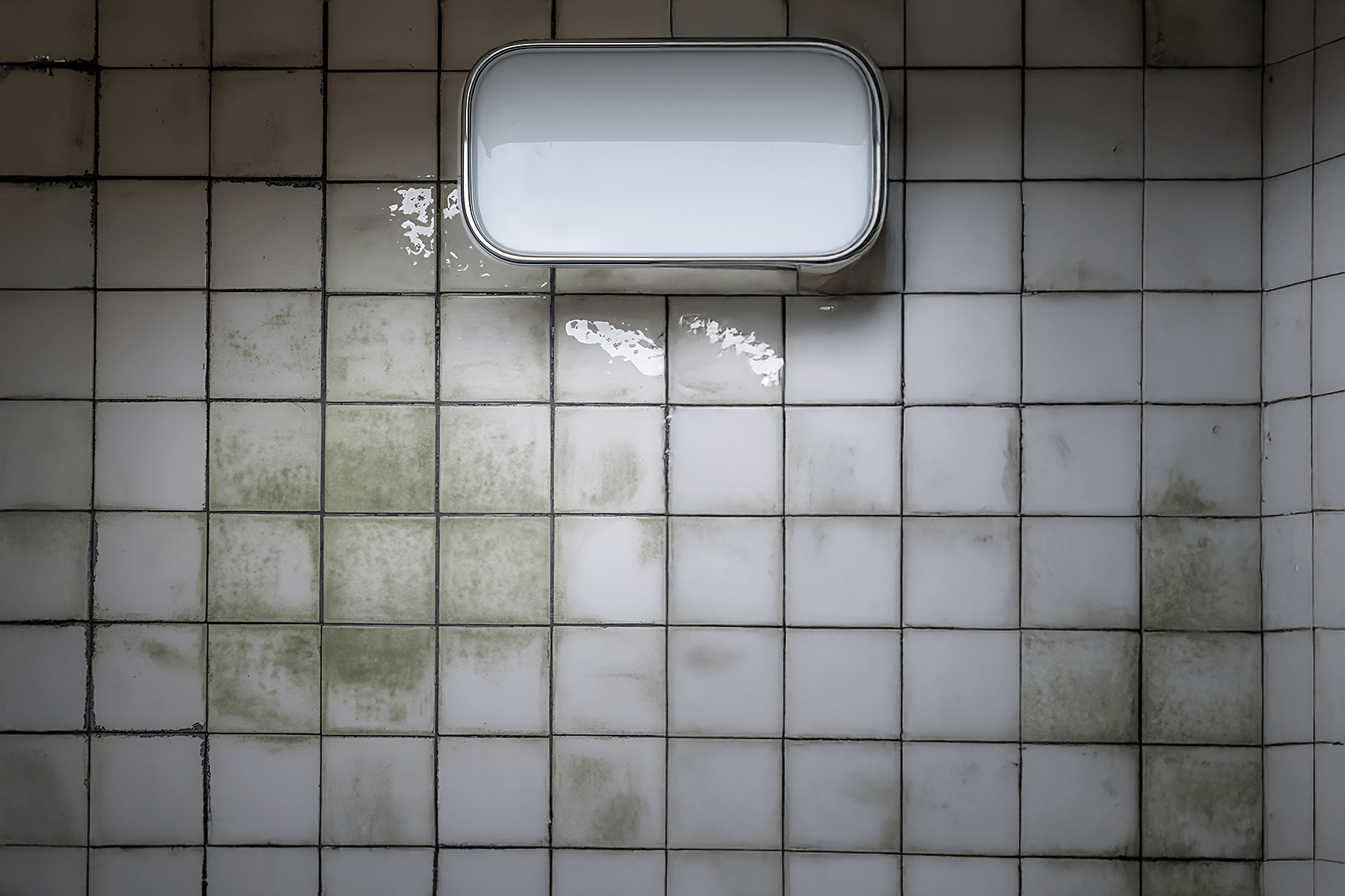
Surface mould that comes off with a scrub is a cleaning problem. Mould that returns within days of thorough cleaning means it is living inside the grout matrix itself, feeding on moisture trapped in the porous structure of degraded cement grout. No amount of bleach fixes this. The only solution is removal and replacement.
Can damaged grout cause a leaking shower? Yes, directly. The shower base and wall junctions rely entirely on grout and silicone to contain water. When those fail, water finds the path of least resistance through the wall cavity, into subfloor timbers, or through to the ceiling of the room below.
What happens if you delay shower regrouting repairs at this stage? Timber rot, structural damage, and potential mould remediation costs that make the original regrout quote look trivial in hindsight. More information on that situation is in our leaking shower repair guide.
In Queensland, persistent moisture in wall cavities and subfloor timbers from a leaking shower is also a documented pathway to termite activity, a repair cost that makes any regrouting bill look minor.
Tap across the tiles with your knuckle. A solid tone means good adhesion. A hollow echo means the adhesive behind has failed, usually because water dissolved the bond over time. Hollow tiles that are not addressed become loose tiles that become broken tiles that become a full bathroom renovation.
Can you regrout a shower yourself or should you hire professionals? The honest answer depends on the scope and your existing trade experience.
Materials for a DIY regrout run well under $200 for most showers. You need a grout saw or oscillating tool, a bag of appropriate grout, a rubber float, a sponge, and silicone for the corners. Hardware chain stores stock everything.
The actual cash outlay is low. But there are real hidden costs to factor in. Mechanical grout removal tools are loud and dusty, and you will need to contain the dust to the wet area. Tool hire adds cost. Most critically, DIY jobs very frequently apply new grout on top of inadequately cleaned joints, which locks in moisture and causes the new grout to fail within twelve to eighteen months.
A professional service for a standard shower costs between $600 and $900 in most Australian states. In Brisbane, the market data suggests a range of $900 to $1,800 is common, reflecting higher labor costs and the premium materials most reputable services use. That difference versus a $15,000 to $35,000 full bathroom renovation makes regrouting the obvious first response to the signs of wear discussed above.
You are paying for mechanical removal tools; professional dust containment; commercial-grade epoxy or polymer-modified grout not available in retail, the correct silicone specification for the movement joints, and a tradesperson who will identify waterproofing issues before they become demolition.
The most common error is incomplete grout removal. New grout applied over remnants of old grout does not bond properly and will crack and lift within months, leaving you to start again. The second most common mistake is applying the wrong product: using sanded grout in a two millimetre wall joint causes surface cracking, while using unsanded grout in a wide floor joint causes shrinkage. The third is skipping the movement joints entirely, which are the silicone-filled corners and floor-wall junctions, meaning the most leak-prone areas remain unsealed.
If you are unsure whether professional help is the right call, our listing of grout specialists around Australia gives you a starting point for finding qualified local operators.
What is involved in the shower regrouting process from a professional’s perspective? The steps below reflect what a qualified operator does on site, not what a five minute YouTube tutorial skips over.
Before any tools come out, the shower is assessed. Tiles are tapped for hollow spots. Grout lines are examined for depth and condition. Moisture meters are used to check the substrate in suspected problem areas. If waterproofing failure is confirmed, the customer is informed before the regrouting quote proceeds, because additional work will be required for a lasting result.
An oscillating multi-tool fitted with a grout removal blade is the standard approach. This vibrates at high frequency to dislodge grout material without the lateral force that would chip the tile face. The full depth of the joint needs to be cleared, and the sides of each joint are then vacuumed clean to remove dust that would prevent adhesion.
Manual scrapers and dental pick-style tools deal with corners and areas close to fittings where powered tools cannot reach safely.
Professional grout is mixed to a specific consistency and forced into the joint with a rubber float using diagonal strokes to fill air pockets. The excess is dragged off the tile face. Timing is critical, particularly with epoxy grout, which has a working time of around thirty minutes before it begins to set. Residue on tile faces is cleaned off with a dampened sponge before it cures.
Once the new grout has cured, the internal corners and base joints are packed with mould-resistant silicone. This is where most shower leaks actually originate because these corners flex slightly with temperature change and house movement. Rigid grout in these locations always eventually cracks. Silicone accommodates the movement.
Once the new grout has cured, the internal corners and base joints are packed with mould-resistant silicone. This is where most shower leaks actually originate because these corners flex slightly with temperature change and house movement. Rigid grout in these locations always eventually cracks. Silicone accommodates the movement.
Cement-based grout on floors and walls is then treated with a penetrating sealer to reduce future staining. For a visual breakdown of the entire sequence, our guide on how to regrout a shower covers this in more detail.
Regrouting fixes the tile surface. It does not fix what is underneath. If the waterproofing membrane has failed, new grout on the tile face will not stop the water. It redirects it temporarily.
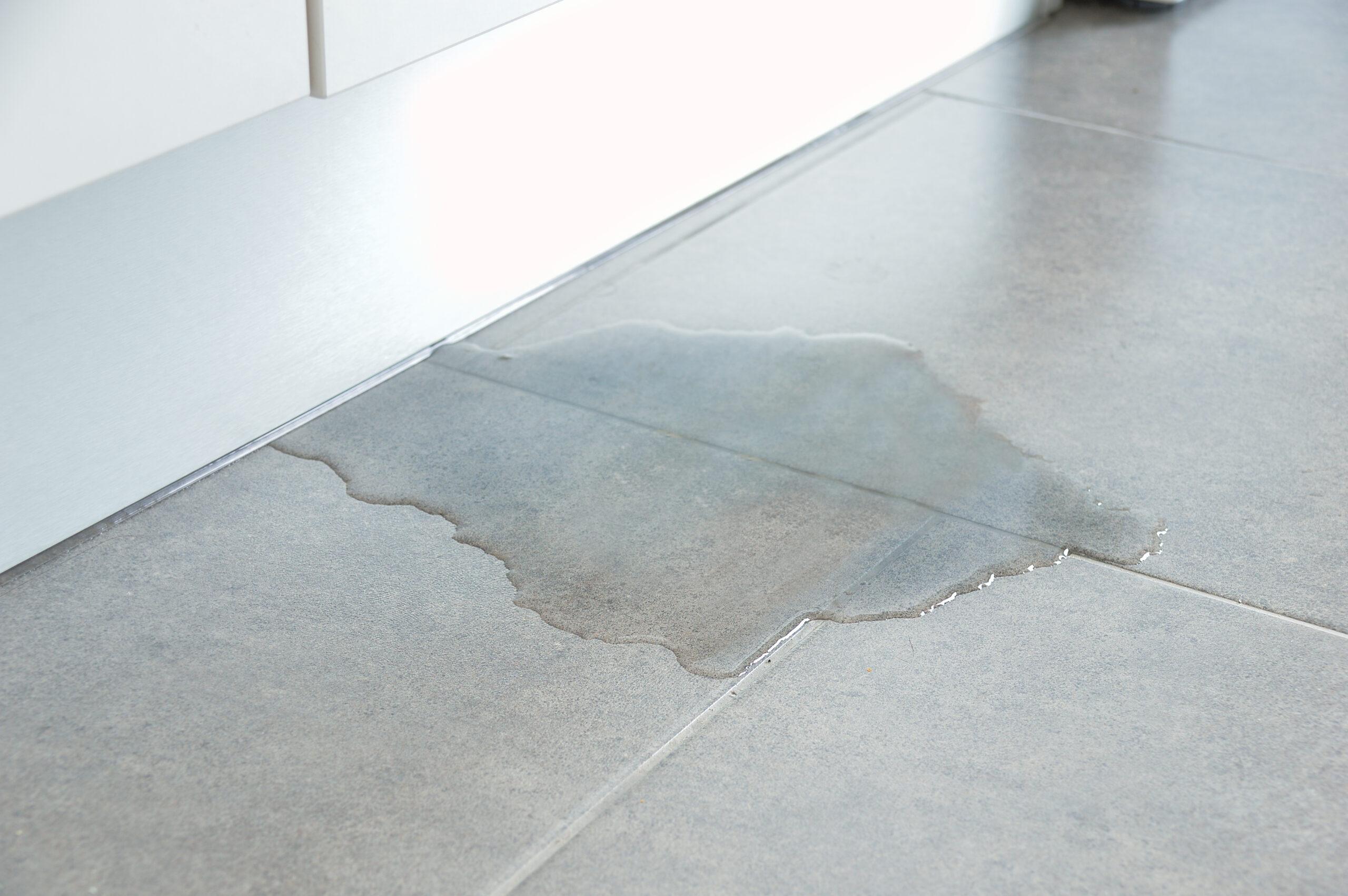
Can regrouting fix a leaking shower without removing tiles? In the majority of cases, yes. If the waterproofing membrane underneath is intact and the leak is caused purely by failed surface grout and compromised silicone, a thorough professional regrout and reseal will stop the water movement completely.
This is specifically how professionals repair leaking showers without removing tiles: the damaged grout is removed, the surface is treated, and commercial-grade products rated for continuous wet area exposure are applied to form a new barrier.
However, if the membrane has failed, surface treatment is only a delay. You may stop the immediate drip, but the water is still finding the substrate, and the damage is accumulating. If you have any doubt about whether the membrane is intact, leak detection by a specialist will give you a definitive answer before you spend money on the wrong solution.
Our shower repair services address everything from minor reseals to full membrane restoration. When waterproofing issues extend beyond the tile surface, our tiling and waterproofing team provides a complete repair solution.
How long does professional grout last compared to DIY? A professional job using quality polymer-modified cement grout and commercial silicone typically holds cleanly for eight to twelve years in a regularly used family bathroom. Professional epoxy regrouting can extend beyond fifteen years. Some operators now offer lifetime warranties against leakage on epoxy applications, which speaks to the confidence placed in the product.
A DIY job using retail grout and without mechanical joint removal might look good for the first year and show cracking and staining within two to three years.
To get the most from any regrout, professional or otherwise, follow a basic maintenance routine:
The best way to save money on regrouting is not to delay treatment.
Grout that is cosmetically poor but structurally intact costs the minimum to repair. Grout that has allowed water to reach the substrate for six months costs significantly more because you are often dealing with membrane damage, mould remediation of the adjacent framing, and potentially loose tiles that need resetting before regrouting can even begin.
A few practical ways to manage costs:
For landlords and property managers: A regrout between tenancies costs a fraction of the damage claim that follows a leaking shower reported by a new tenant. In Queensland, landlords are responsible for maintaining wet areas in waterproof conditions. A shower with visibly degraded grout is a documented maintenance liability.
A professional regrout takes one working day and causes zero disruption to a vacant property. Budgeting a regrout inspection at each tenancy changeover is a predictable way to prevent emergency repair costs.
Before confirming any booking, ask these five questions:
How do you remove the old grout: by hand or with a powered tool?
What specific product are you applying to?
Does the quote include silicone on all corner joints?
What do you do if you find waterproofing damage during the job?
What does your warranty cover labor, materials, or both?
When should you call a professional grout repair service? Right away if you notice cracking, staining that won’t clean, hollow tiles, or moisture appearing outside the shower area. Every month of delay with a leaking shower can add structural damage costs that far exceed the price of regrouting.
If you’re located in Southeast Queensland, our shower regrouting Brisbane service provides local expertise and convenient booking options.
A professional regrout of an average shower costs $600 to $1,500. A full shower renovation, including demolition, new waterproofing membrane, new tiles, new screen, new tapware, and tiling labour, costs somewhere between $10,000 for a small bathroom strip and redo and $35,000 for a full bathroom upgrade with quality finishes.
Regrouting makes financial sense when the tiles themselves are in good condition, the layout is not being changed, and the waterproofing membrane is intact. It is not the right call when tiles are cracked or porous, when the membrane has failed, or when there is structural water damage requiring significant subfloor or stud repair.
This approach professionally regroups the shower, replaces the screen, and upgrades the tapware. The structural problem is fixed. The visual result looks like a renovation.
Approximate Brisbane costs for this package:
| Component | Cost Range |
|---|---|
| Professional shower regrout | $600 to $1,200 |
| Shower screen replacement | $800 to $1,800 |
| Tapware upgrade (supply + plumber) | $400 to $700 |
| Total package | $1,800 to $3,700 |
This sits well below the $17,000 to $35,000 entry point for a full renovation. For landlords refreshing between tenants or homeowners preparing to sell, this offers the best cost-to-visual-impact ratio without demolition.
A standard shower in average condition typically takes one full working day, six to eight hours, for a professional to complete. Budget for twenty-four to forty-eight hours of minimal use after the job to allow full grout cure and silicone adhesion before returning to normal water exposure.
Tile replacement involves the demolition of existing tiles, full waterproofing reapplication, and the purchase of new products, plus tiling labour. Even a partial tile replacement on a single shower wall often exceeds $2,000. A full regrout of the same shower will be a fraction of that cost.
Yes, when the leak originates at the grout and silicone surface layer. If the leak involves a failed membrane underneath the tiles, regrouting treats the symptom rather than the cause. Leak testing before committing to surface treatment is always the recommended starting point for leaking showers.
There is no fixed rule, but a realistic guide is every eight to twelve years for a professionally installed cement grout in a standard family bathroom. Epoxy grout extends that interval to fifteen years or more. If you use the squeegee and avoid acidic cleaners, you will be at the longer end of those ranges.
Epoxy grout is the most durable option currently available. It is non-porous, which means mould has nothing to grow in; it does not require separate sealing; it resists staining from soap and shampoo; and its flexibility accommodates minor structural movement without cracking. The higher installation cost is almost always justified by the longer service life in a busy household shower.
Need a quote for shower regrouting in Brisbane or South East Queensland? Our team at Aquatech Grouting provides free, no-obligation assessments with transparent pricing before any work begins.